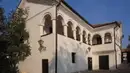
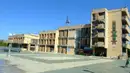
Krajne Museum from Negotin is composed of three parts: The Archaeological Museum, Stevan Mokranjac’s birth house and the Hajduk Veljko Museum. The museum has initially functioned in a modest space. The museum objects are grouped...
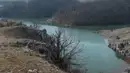
The “Iron Gates I” Hydro- Energetic and Navigation System which stands as a symbol of the Romanian energetics and result of the Romanian-Yugoslavian collaboration, was inaugurated on the 16th of May 1972. The “Iron...
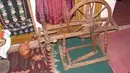
The Ethnograhic Museum is located inside the Genaral School (1st-8th grades) of Svinița. Far from the urban settlements, Svinița inhabitants keep and guard the local ethnographic elements. An example is the fleece bag which...
Băluță Canyon is the only important and great canyon of Ponoarele Village, with a length of about 1 km. It is located near the Baluță Village, bordered by Cornetul Băluței and Raieni; the limestone...
Eselnita is a village in the western part of the county, on 57 Route. The village is located on the Danube river, 7 km from Orsova, at the confluence with the same named river....
Ilovița village is located on Mehedinți Plateau at 127 m altitude, at a distance of 20 km from Drobeta Turnu Severin. Ilovița’s neighbours are Orșova (at S-V), Cireșu (at N-E) and Topleț Commune, Caras-Severin...
There are two temporary lakes of karst origin, of different size, located on both sides of Ponoarele Cave. Their names come from the local dialect, meaning that “a zatoni” is a verb used for...
“Doina and Teodor Grigore” Ethnographic Museum is located in Eselnița, being the first private museum in Mehedinți County. There are over a thousand pieces of pottery, tools and costumes. Most of the objects and...
The Museum of Majdanpek was created in 1998. The museum became independent of the Department of Mining and Metallurgy in Bor, who was opened in 1984. The museum has archaeological, ethnological, historical, artistical, technical,...
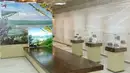
The museum has documentary collections structured on archeology, ethnology, history, arts, technical and mineralogy, which presents the mining and the metallurgical development from prehistory up to present. Mining and Metallurgy Museum became functional in...


 Română
 Serbian