Română
 Serbian
The first wooden church in Eibenthal was built in 1847 and after that is was demolished.
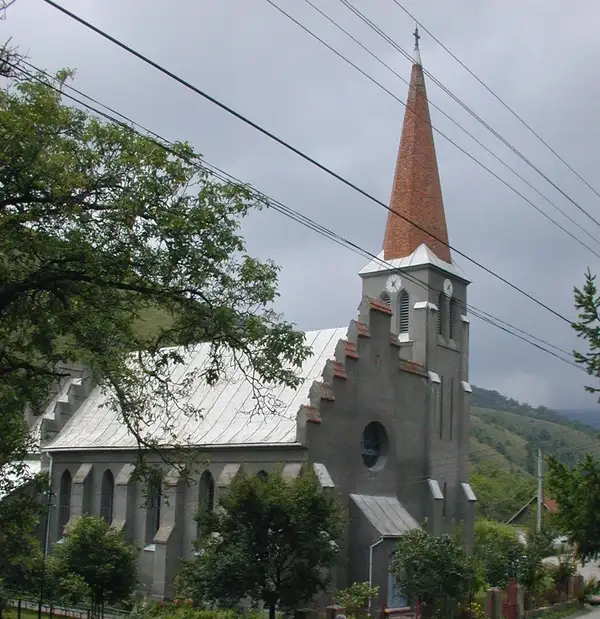
The Catholic Church in Eibenthal was built in 1912, patronized by Saint John from Nepomuk (Jan Nepomuk).
In this church was installed the pipe organ of the old catholic church in Orșova, bearing the signature of the Viennese master Josef Seyberth. Between the years 1988-1989, the church’s painting was remade.
Eibenthal Village, situated in the south-west part of Dubova, near Svinița Village (Mehedinți County) is a genuine linguistic island of the czech minority in Romania. The village was founded in 1827, during the second cover of colonization with czechs, having the purpose of colonizing the Austro-Hungarian border area, mainly due to militar reasons. In those days, about 35 families from around the towns Plzen, Pribram, Kladno, traveled by rafts from Viena to Moldova Nouă and founded, between the years 1826-1828, the Eibenthal Village.
Farsang– Masked feast
The term ”farsang” comes from german and means „mask”. It seems that this habit (profane at the begining- became during the time a religious holiday) would have occured in the german and catholic-hungarian world, expanding in the south Banat at the romanian and serbian comunity. Farsang feast initially start on the first day after Shrove Tuesday, 40 days befor lent Easter.
The significance of this celebration is quite complex: through irony, satire, parody is reveal wrongs of others; inconvnience, distres caused by nature in that year, then a chance of spiritual purification. Also, Frasang is a show, a carnival of costumes amd masks. Czech people gather around from Eibenthal and Baia Nouă villages and romanians, in the Cultural Centre of Eibenthal Village. The ball opens with Czech folk games, and then it’s held a raffle after which are the parade of masks and their awards.